
Last updated: September 8, 2026
On master lock vs kwikset vs schlage entry level deadbolt value Lakeshore Toronto, the honest answer from the field is this: Schlage’s B60N-class deadbolt is the only one of the three we install on a lakefront-facing entry door without adding a caveat, Kwikset’s SmartKey line wins purely on rekey convenience for landlords, and Master Lock belongs on a gate, a locker or a shed, not on the door you sleep behind. All three are real, legitimate brands. They are just built for three different jobs, and most people buy the wrong one.
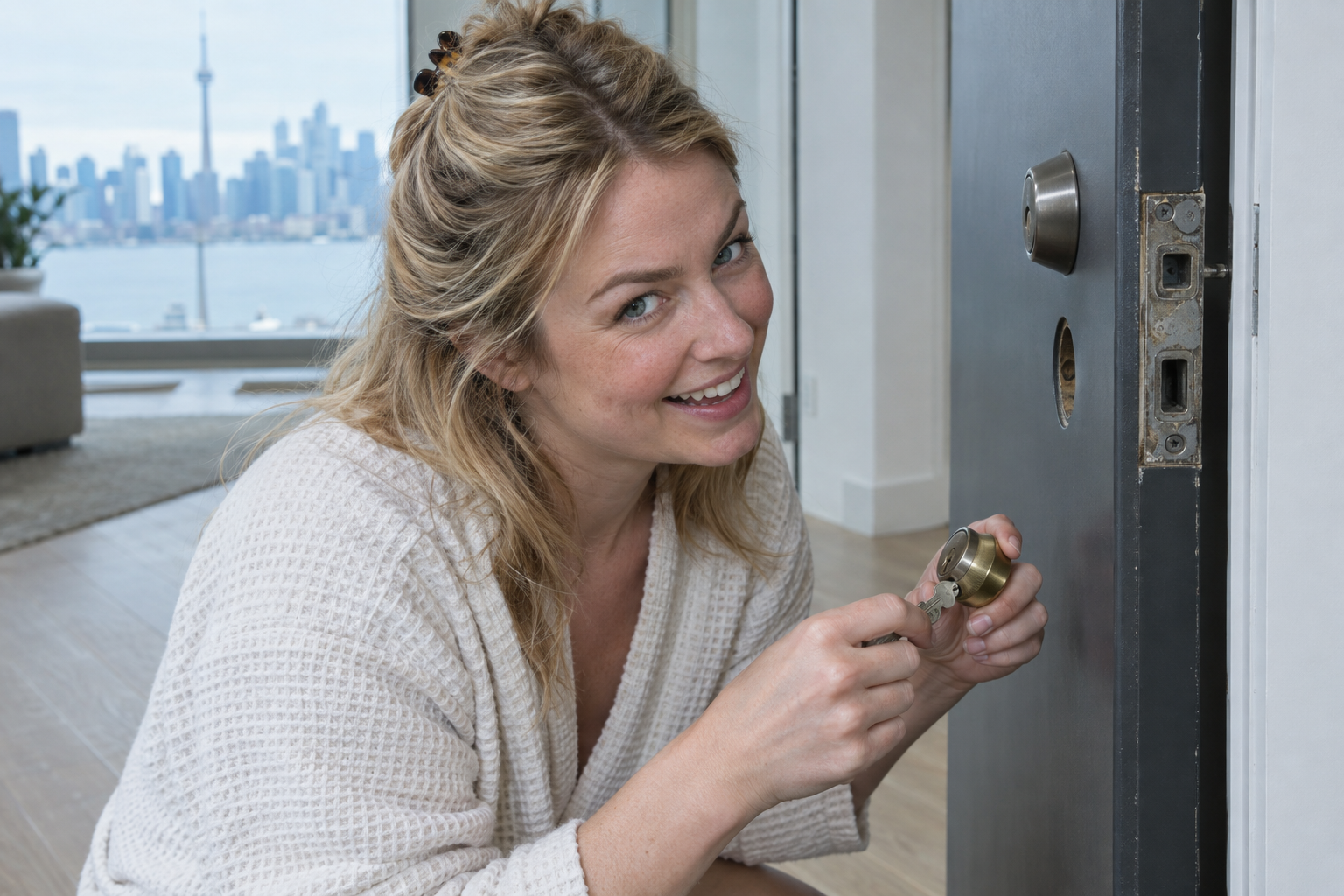
Here is the part nobody says out loud at the hardware aisle: a deadbolt is only one part of an entry door’s security. Door condition, jamb strength, strike plate installation and lock choice all matter. If you are a Lakeshore homeowner in an older brick semi with an original wood jamb and a door that swells in July humidity off the lake, brand choice matters less than you think and strike plate depth matters more than you think. We will get to both.
- The three-brand comparison table
- Master Lock: where it genuinely earns its place
- Kwikset: SmartKey convenience and its trade-off
- Schlage: the entry-level bolt we actually install
- When to choose which
- What does ANSI Grade 1, 2 and 3 actually mean?
- Our verdict
- Our take after years of locksmithing the Lakeshore
- FAQ
- Schlage B60N class deadbolts are one option to consider for a residential entry door.
- Kwikset SmartKey is another lock option homeowners and property owners may compare.
- Master Lock products may be considered for gates, sheds and storage areas.
- Lock rekeying and lock replacement are priced per job after the lock and door are assessed.
- Entry deadbolts should be selected with the door, jamb and strike plate in mind.
- High security cylinders may be discussed when lock changes or door hardware upgrades are needed.
Master Lock vs Kwikset vs Schlage entry-level deadbolt value in Lakeshore Toronto, side by side
Master Lock, Kwikset and Schlage are all mainstream North American hardware brands sold at every big-box store in the West GTA, and each one occupies a distinct tier. The table below compares them on the attributes that actually change outcomes on a door in Lakeshore, New Toronto or Long Branch, not on marketing copy.
| Attribute | Master Lock | Kwikset | Schlage |
|---|---|---|---|
| Core product | Padlocks, hasps, combination locks, lockboxes | Residential knobs, levers, deadbolts | Residential and light-commercial deadbolts, levers |
| Typical entry-tier grade | Not ANSI door-hardware graded (padlock category) | ANSI/BHMA Grade 3 on the cheapest bolts, Grade 2 mid-line | ANSI/BHMA Grade 2 common at entry, Grade 1 available |
| Standard cylinder pins | 4-pin on low-tier padlocks | 5-pin standard; SmartKey uses a side-bar wafer design | 6-pin on most deadbolt cylinders |
| Rekey by owner | Check product instructions | Check product instructions | Professional rekeying available |
| Best fit | Gates, sheds, storage lockers, marine and lakefront storage | Rental units, frequent tenant turnover, secondary doors | Primary front and side entry doors |
| Smart lock line | Smart lock options vary by product | Smart lock options vary by product | Learn about smart lock options |
| Winter / salt-air behavior near the lake | Shackle icing and corrosion unless a weather-shielded model | Adequate; finish wear shows first on exterior levers | Heavier bolt and housing tolerate seasonal jamb movement better |
Master Lock: where it genuinely earns its place
Master Lock is a padlock and portable-security brand, and judged on that category it is a legitimate, sensibly engineered product line. Their laminated steel and hardened shackle padlocks do exactly what a garden gate, a storage cage or a Lakeshore backyard shed needs. We fit them without hesitation in that role.
Where the value collapses is the cheap end. A 4-pin brass-body combination or keyed padlock is a deterrent, not a barrier. It says “somebody owns this”, and that is a real function. It is not a security function.
There is also a climate wrinkle specific to properties near the water. Padlocks left exposed south of Lake Shore Boulevard through a February freeze-thaw cycle seize. The shackle takes on moisture, refreezes overnight, and by morning the key turns and nothing moves. The fix is not a bigger lock, it is a shrouded or weather-covered model plus a dry lubricant in the fall. We have watched a homeowner snap a key in a frozen padlock trying to muscle it; that becomes a broken-key extraction call instead of a five-dollar can of lubricant.
Bottom line on Master Lock in this three-way: excellent shed and gate hardware, correct choice for lakefront and marine storage, wrong choice as your primary door brand. Nobody should be shopping Master Lock against Schlage for a front door, because they are not competing for the same doorway.
Kwikset: SmartKey convenience and the trade-off nobody explains
Kwikset’s real innovation is SmartKey: a cylinder the owner can rekey themselves in under a minute using the current key plus a small learning tool, no disassembly and no locksmith visit. For a landlord running units through Long Branch, Mimico or New Toronto with tenants rotating every twelve months, that is a genuinely useful feature and it saves real money on turnover.
Here is the part the packaging does not spell out: SmartKey is a side-locking-bar mechanism with wafers, not a conventional bottom-pin stack. That means it behaves differently under attack than a standard cylinder. It is not “more” or “less” secure in one sentence; it is a different attack surface, and anyone telling you otherwise is simplifying.
The Kwikset failure we see most often has nothing to do with picking. It is the bottom-of-range Grade 3 deadbolt with a short bolt throw and a strike plate held by two 3/4-inch screws into soft pine trim. That assembly fails to a shoulder, not to a pick. Honestly, this surprised me the first few times: the cylinder was intact and the wood around it was destroyed.
Kwikset SmartKey deadbolts let owners rekey in under a minute, which is why they suit high-turnover rentals across Long Branch, Mimico and New Toronto. Buy the Grade 2 SmartKey line rather than the cheapest Grade 3, and replace the supplied strike screws with 3-inch screws that reach the stud.
Schlage: the entry-level deadbolt we actually install
Schlage’s entry-tier B60N-class deadbolt carries an ANSI/BHMA Grade 2 residential rating and a 6-pin cylinder, and that combination is why it is the default recommendation on a primary entry door in Lakeshore Toronto. Six pins instead of five is not a magic shield, but it meaningfully raises the effort required, and the bolt hardware itself is heavier.
The practical advantage shows up in doors that move. Older Lakeshore and Mimico houses have wood doors that swell in humid lake air through July and August, then shrink back in January until you can see daylight at the strike. A heavier bolt with a full one-inch throw keeps engaging through that seasonal swing. The lighter bolts start catching the edge of the strike, people force them, and the tailpiece wears.
Smart locks can be considered as part of a lock change or door hardware update. A mobile locksmith technician can assess the existing door hardware and discuss installation options before work begins.
Rekeying needs depend on the lock type and the property’s access needs. Professional rekeying can be arranged when a new key is needed for an existing lock.
When to choose which
Choose Master Lock when the thing you’re locking is not a door
Backyard gates, garden sheds, bike storage, marina and lakefront lockers, contractor job boxes. Buy a weather-shrouded model if it lives outdoors through a Lakeshore winter.
Choose Kwikset SmartKey when keys change hands often
Rental units, house-sharing, short-term guest suites, secondary side doors. Go Grade 2, not the cheapest Grade 3, and upgrade the strike screws on day one.
Choose Schlage when it’s the door you actually sleep behind
Front entries, back entries onto a laneway, garage-to-house doors. Grade 2 minimum, 6-pin cylinder, full one-inch bolt throw.
Consider the door’s security needs
For a business, tools or a property with security concerns, discuss lock changes and door hardware options with a professional locksmith.
What does ANSI Grade 1, 2 and 3 actually mean on a deadbolt?
ANSI/BHMA grades are performance ratings from the Builders Hardware Manufacturers Association, with Grade 1 the highest and Grade 3 the lowest, tested for cycles, strength and finish durability. The label on the back of the blister pack is not marketing; it is a real, published standard, and it is the fastest filter in the aisle.
For a Lakeshore Toronto house, the primary entry lock should be considered alongside the door, jamb and strike plate. Commercial doors and heavily used residential doors may need different lock and door hardware options.
What the grade does not measure is pick resistance in any detailed way. A Grade 2 lock with a standard 6-pin cylinder still opens to a competent picker. If picking and key duplication are your genuine worry, that is a cylinder question, not a grade question, and it points at high-security cylinder installation rather than a different big-box box.
Our Verdict
For the owner-occupied Lakeshore Toronto house on a standard entry door, Schlage wins the master lock vs kwikset vs schlage entry-level deadbolt value question. A Grade 2, 6-pin B60N-class bolt installed with 3-inch strike screws into the framing is the best security-per-dollar available at that tier, and the Schlage Encode upgrade path means you are not throwing the door prep away in three years.
For the landlord or property manager juggling multiple units across the west end, Kwikset SmartKey wins, and it is not close. Being able to rekey between tenants without booking a visit is worth real money over a decade of turnover, and the security delta at Grade 2 is not large enough to override that operational advantage on a rental’s secondary doors.
For anyone locking a gate, shed, bike, or lakefront storage locker, Master Lock wins outright, because the other two do not make the product. Buy the shrouded shackle version and lubricate it before the first freeze.
For a commercial door, lock changes and door hardware should match the business’s access needs. A professional locksmith can assess the door and discuss suitable options before work starts. You can read more on commercial locksmith services.
Our take after years of locksmithing the Lakeshore
Customers overweigh the brand name on the box and underweigh three inches of steel screw. The single highest-return upgrade on any door in Etobicoke or Lakeshore is replacing the stubby screws that ship with the strike plate with 3-inch screws that bite into the stud behind the jamb. It costs almost nothing. It changes what a kick does to the door.
The second thing people underweigh is key control. A Schlage or Kwikset key can be copied at any kiosk by anyone holding it, including a contractor, a former roommate, or the last tenant. Patented systems from Mul-T-Lock and Medeco stop that, which is exactly why condo buildings use restricted-key systems. We recovered an Islington Village condo unit after a resident lost both keys, and because the building ran a mandatory restricted-key system, only a registered locksmith could legally cut and issue a replacement. In and rekeyed in 45 minutes. That restriction felt like a hassle to the resident and it is precisely why their keys cannot be copied behind their back.
The one thing we would tell a friend: lock work can depend on lock type, door material, bore size and what is found on site. You get the exact price before any work starts.
FAQ
Is a Schlage deadbolt really better than a Kwikset for a Lakeshore Toronto front door?
Schlage’s entry-tier deadbolt is generally the stronger front-door choice in Lakeshore Toronto because its common B60N-class bolt is ANSI/BHMA Grade 2 with a 6-pin cylinder, versus 5 pins on standard Kwikset. Kwikset still wins for rental turnover thanks to SmartKey owner rekeying. On any brand, install 3-inch strike screws into the stud, because that single step matters more than the brand badge.
How much does it cost to rekey or replace a deadbolt in Lakeshore or Etobicoke?
Rekeying and lock replacement are priced per job after the lock and door are assessed. If you are moving into a previously rented unit, consider rekeying the existing locks.
Can a Master Lock padlock be used on a house door instead of a deadbolt?
Master Lock padlocks are built for gates, sheds, lockers and lakefront storage, not as a substitute for a graded door deadbolt on a Lakeshore home. A hasp-and-padlock setup on an exterior house door also fails egress logic, since anyone inside cannot exit if the padlock is on the outside. Use Master Lock where it excels and put a Grade 2 Schlage or Kwikset deadbolt on the door itself.
Are big box deadbolts ever worth buying?
When choosing a deadbolt, consider whether it suits the door and the level of access needed. For a primary entry lock, a professional locksmith can assess the existing door hardware and discuss lock change options.
Sources
- ANSI/BHMA grading standards for door hardware and deadbolts – Builders Hardware Manufacturers Association (BHMA)
- Schlage B60N deadbolt specifications, grading and Encode smart deadbolt line – Schlage
- Kwikset SmartKey rekeying technology and deadbolt product grades – Kwikset
- Service pricing, rekey and lock replacement ranges quoted in this article – Etobicoke Locksmith
Etobicoke Locksmith
 Listen to article
- Schlage vs Kwikset vs Yale: A Side-by-Side Look at Entry-Level Deadbolts for Etobicoke Homes
- Kwikset SmartKey vs Schlage B-Series vs Weiser Powerbolt: A Head-to-Head for Lakeshore Homeowners
- Yale Assure vs Schlage Encode: Which Keypad Deadbolt Is Easier to Install in a Mississauga Townhouse
- Master Lock Padlock Systems for New Toronto Landlords
- ASSA Abloy vs Medeco vs Mul-T-Lock: Which High-Security Lock Brand Is Worth the Price in Lakeshore Toronto