
Last updated: October 16, 2026
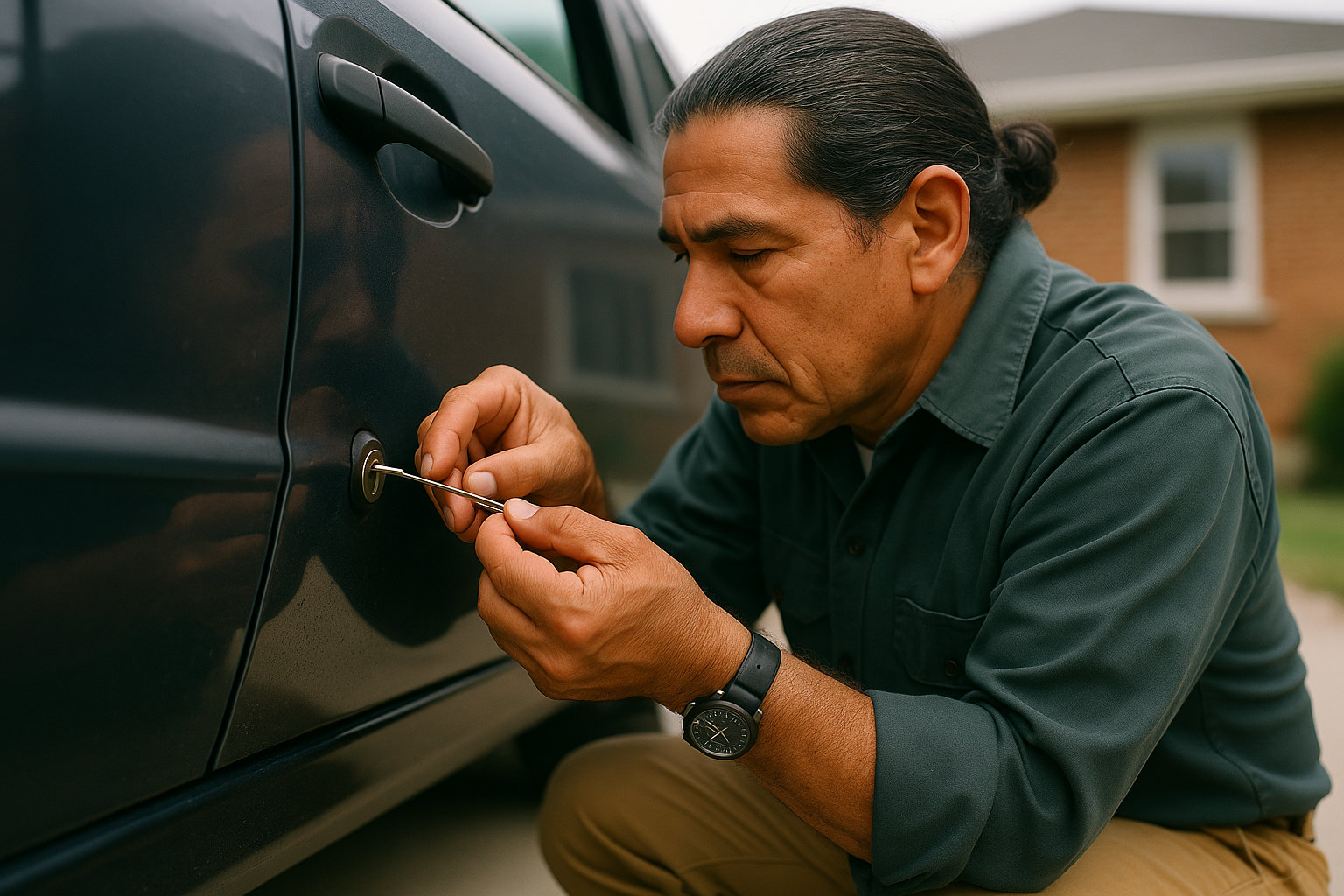
A common question from drivers
Broken car key extraction in New Toronto without replacing lock hardware is the normal outcome: a snapped blade can usually be pulled from a car door, trunk or ignition cylinder with thin extractor tools, and the lock keeps working once the fragment is out. The lock only needs replacing when its internal wafers are bent, the cylinder is cracked, or someone has glued or hammered the fragment deeper. Either way you will need a new key afterward, and on vehicles built for Canada since September 1, 2007, that key usually carries a transponder chip that has to be programmed.
If you’re a driver parked on Lake Shore Boulevard West holding the head of a key while the blade sits inside your door, the most useful thing you can do right now is stop turning. Every extra twist presses the fragment against the wafers and makes a clean extraction harder. Leave it alone, keep both pieces, and the odds of saving the lock stay on your side.
- Extraction usually saves the lock: a snapped blade can normally be removed from a car door, trunk or ignition cylinder with thin hooked or spiral extractor tools, leaving the cylinder in working order.
- Cylinder position matters: if the key broke while turned, the plug has to be rotated back to its insertion position before the fragment can slide out.
- Glue and paperclips are what kill locks: superglue bonds the fragment to the wafers, and pushing the piece deeper can bend them, which is the usual reason a cylinder ends up replaced.
- A new key is still required: Canada’s Motor Vehicle Safety Standard 114 has required immobilizers on new vehicles since September 1, 2007, so most replacement keys need a programmed transponder chip, not just a cut blade.
- Flip keys are the easy case: on flip-style keys common to Volkswagen, Hyundai and Kia models, a new cut blade can often be fitted into your existing fob, keeping its programmed electronics.
- The same logic applies at home: a broken key in a Schlage, Kwikset, Yale, Mul-T-Lock or Medeco cylinder can usually be extracted too, which matters most for high-security cylinders with restricted keys.
The Short Answer: Broken Car Key Extraction in New Toronto Without Replacing Lock Hardware
Yes, the lock can almost always be saved. Broken car key extraction without replacing lock hardware is a routine locksmith job: the technician aligns the cylinder, slides a thin extractor alongside the fragment, catches the cuts, and draws the piece straight out without taking the door panel apart.
What decides the outcome is what happened right after the snap. A fragment that was left alone tends to come out cleanly, while a fragment that was glued, hammered or chased with a paperclip can damage the wafers on its way, and that is when a new cylinder enters the conversation. Once the piece is out, you still need a working key, which on most vehicles built since September 1, 2007 means a cut blade plus a programmed transponder.
The Full Answer
Whether a snapped car key ruins the lock depends on six details: why it broke, where it broke, whether it was turned at the time, what kind of key it was, what happened in the minutes afterward, and whether a house lock is part of the story. Each one shifts the answer a little.
Why does a car key snap inside the lock?
Car keys snap inside locks for three common reasons: metal fatigue in an old or hairline-cracked blade, a cylinder that has stiffened from corrosion or ice, and sideways force from using the key as a lever. The blade is the weakest link. It fails before the lock does, which is why the lock is usually still worth saving.
New Toronto sits on the Lake Ontario shoreline in south Etobicoke, between Mimico and Long Branch, and cars parked near the water spend winter in damp lake air on streets the City of Toronto treats with road salt. Salt spray and moisture work into exposed door cylinders and stiffen them, which is exactly the condition that turns a worn key into two pieces on a cold morning.
Push-to-start cars add a twist. Their driver’s door cylinder can go months or years without a key in it, so it seizes quietly, and the first time it is needed (usually when the fob battery dies) it is at its stiffest. Ignition breaks have their own common cause: when the front wheels are turned against a curb, the steering column lock binds the ignition, and drivers force the key instead of rocking the wheel slightly while turning.
How does a locksmith get the piece out without damaging the cylinder?
Most car door and trunk locks use wafer tumblers: flat, spring-loaded plates that the key’s cuts push to the right height so the plug can turn. A broken key extraction works by sliding a blade-thin extractor, with tiny hooks or a spiral edge, along the side of the fragment, catching its cuts, and pulling it straight back out of the keyway.
The cylinder has to be in its home position first. If the key snapped while turned, the technician rotates the plug back using the remaining stub or a turning tool, because a fragment cannot exit while the wafers are offset from the keyway. A clean extraction leaves no mark on the face of the lock, and drilling is a last resort, not a first move.
Car door and trunk locks use wafer tumblers, and a thin hooked or spiral extractor can pull a snapped blade out past them without opening the door panel. The plug must be returned to its insertion position first. Drilling the cylinder is reserved for fragments that cannot be gripped any other way.
Before a technician arrives, these steps keep the lock in savable condition:
Stop turning the stub
Each extra twist grinds the broken edge against the wafers. Leave the cylinder in whatever position it ended up in.
Skip the glue, tweezers and paperclips
Superglue on a stick can bond the fragment to the wafers, and probing with a paperclip tends to push the piece deeper.
Keep both pieces
The head holds the transponder chip on most post-2007 keys, and the two halves together show the cut pattern for a new blade.
Note the year, make and model
Whether the car was built before or after September 1, 2007, and whether it is push-to-start, decides what the new key needs.
Ask for a mobile extraction and a new key in one visit
Describe where the key broke (door, trunk or ignition) so the technician arrives with the right extractors and key blanks.
Does it matter whether the key broke in the door, trunk or ignition?
A key broken in a car door lock is the most straightforward extraction, because the keyway faces outward and the cylinder has few moving parts behind it. Trunk locks behave much the same, although many newer vehicles have no exterior trunk keyhole at all. Ignitions are more delicate.
An ignition cylinder connects to the steering column lock and the ignition switch, so a fragment there should never be used to start or drive the car. Extraction still works in most cases, but the plug usually needs to be returned to the lock or off position first, and a worn ignition that caused the break may need servicing afterward.
| Where and how it broke | Can the lock usually be saved? | What is typically involved |
|---|---|---|
| Driver’s door, key not turned | Yes | Straight extraction with a hooked or spiral extractor, then a new key |
| Driver’s door, key snapped while turned | Yes, in most cases | Plug rotated back to home position, then extraction |
| Ignition cylinder | Usually | Careful extraction; ignition checked for wear that caused the break |
| Push-to-start emergency keyhole | Usually | Handle cap removed with care; narrow tools for laser-cut blades |
| Fragment glued or pushed deep | Sometimes | Extraction attempted; cylinder service or replacement if wafers are damaged |
| Cylinder already forced or punched in a theft attempt | Rarely | Fragment removed, cylinder repaired or replaced |
| House deadbolt (Schlage, Kwikset, Yale) | Yes | Pin-tumbler extraction, then a new key cut or a rekey |
What about push-to-start cars with a hidden keyhole?
This part is for owners of push-to-start vehicles who keep an emergency blade tucked inside the fob and almost never use it, not for drivers who turn a key every morning. On many of these cars, the only mechanical keyhole is on the driver’s door handle, hidden behind a small cap that has to be pried off.
Emergency blades are often laser-cut, also called sidewinder or internal-track keys, with the pattern milled down the middle of a thin blade. Fragments from these keys sit in a narrow channel, so extraction calls for slimmer tools and patience, and the handle cap needs careful removal to avoid scratching the paint.
Here is the useful part: on most push-to-start cars, the emergency blade is purely mechanical. The fob handles the immobilizer, so a replacement blade usually needs cutting only, with no programming, as long as the fob itself still works. That makes this one of the simpler key replacements once the broken piece is out.
Will I need a new key afterward, and does it need programming?
A new key is always needed after a broken key extraction, because the snapped blade cannot be safely repaired. Canada’s Motor Vehicle Safety Standard 114 has required an electronic immobilizer on new vehicles manufactured since September 1, 2007, which is why most keys for those cars carry a transponder chip in the head that must be programmed to the car or cloned from the original.
The key type changes the job. With a fixed-blade transponder key, the cut pattern is read from the two broken pieces or decoded from the lock, and a new chip is programmed. With a flip-style key, common on Volkswagen, Hyundai and Kia models, the blade is held in the fob by a pin, so a new cut blade can often be fitted into your existing fob and the electronics never change.
A common mistake is calling the dealership first for the new key. Details on cutting and programming are on the mobile car key replacement service page.
Does the same apply to a house door lock?
A broken key in a house door lock can usually be extracted without replacing the lock as well. Residential cylinders from Schlage, Kwikset and Yale use pin tumblers rather than wafers, but the method is the same: align the plug, hook the fragment, draw it out, then cut a new key or rekey the cylinder. Kwikset SmartKey cylinders can also be rekeyed with the brand’s own tool once the fragment is gone.
Extraction matters most on high-security cylinders. Mul-T-Lock uses telescoping pin-in-pin tumblers and Medeco uses rotating, angled pins with a sidebar, and both typically sit on restricted key systems where new cylinders mean new controlled keys. Saving the existing cylinder keeps that system intact.
For more on keeping existing hardware, see whether a locksmith can rekey a lock without replacing it, and the earlier breakdown of broken key extractions by lock model.
When the Answer Is Different
A broken key extraction does not save the lock in every situation. The exceptions share one thread: the lock itself was damaged, either before the key snapped or by what happened afterward.
Glue in the keyway. Superglue on a toothpick is a popular internet tip, and it can bond the fragment to the wafers or pins. Once cured, the glue often holds the tumblers in place, and the cylinder may need to be disassembled, cleaned or replaced.
Bent or broken wafers. Screwdrivers, paperclips and hammering the stub can bend wafer tumblers or crack the plug face. Extraction may still succeed, but a lock that no longer turns smoothly with a correct key needs repair rather than a fresh key alone.
A worn or seized cylinder. Sometimes the key broke because the lock was failing. A corroded door cylinder or a worn ignition will snap the next key too, so the honest fix is extraction plus cleaning, lubrication or rebuilding the cylinder.
Earlier theft damage. Forcing a door or ignition lock with a screwdriver is a common break-in method. A cylinder that was already forced may hold the fragment loosely but will not lock reliably again, and it should be replaced.
A dead fob plus a broken blade. On a push-to-start car, a dead fob battery with a snapped emergency blade leaves you locked out entirely. The lockout gets handled first, then the extraction, then a new blade and a fresh fob battery.
Our view
This is opinion, plainly labeled. People overweigh speed. The urge to dig the fragment out with whatever is in the glovebox is understandable, but a broken car key is rarely an emergency on its own, and the few minutes spent waiting for proper extractors are what keep the cylinder intact.
What actually matters is treating the snap as a symptom. A key breaks because the blade was fatigued or the lock was stiff, so the best outcome is extraction plus a fresh key plus attention to the cylinder that caused it. A lock that has spent several winters near the lake deserves a cleaning, not just a new key.
On pricing, a flat number given over the phone before anyone has seen the lock deserves skepticism. A common mistake is accepting that kind of quote at face value; the real cost depends on the lock type, where the key broke and whether the new key needs programming, so a reputable locksmith gives a range and confirms it on site.
Frequently Asked Questions
How long does a broken car key extraction take?
A broken car key extraction from a door lock is usually a short job handled in a single mobile visit, assuming the fragment was not glued or forced deeper. Ignitions and laser-cut emergency keyholes take longer because they need slimmer tools and more care. Cutting and programming a replacement transponder key adds time, so ask for both in the same visit.
Can a locksmith make a new car key from the broken pieces?
A new car key can usually be made from the broken pieces, because together the two halves show the full cut pattern. On vehicles built since September 1, 2007, the head also holds the transponder chip, so keep it even if it looks useless. Flip keys from brands like Volkswagen, Hyundai and Kia can often take a new blade in the original fob.
Should I spray lubricant into the lock before the locksmith arrives?
Spraying lubricant such as WD-40 into a keyway with a fragment inside is best avoided, because it can wash grit deeper and make the broken piece slippery to grip. Leave lubrication to the technician after extraction. For winter prevention afterward, a lock-specific lubricant or dry graphite applied in the fall helps keep door cylinders from seizing.
What does the cost of key extraction and a new key depend on?
The cost of key extraction and a replacement key depends on four things: where the key broke (door, trunk or ignition), the key type (standard, laser-cut, flip or fixed-blade transponder), whether the car needs immobilizer programming under the post-2007 standard, and whether the cylinder needs repair. Etobicoke Locksmith does not publish prices, so contact the team directly to describe your vehicle and get a quote based on the actual job.
Sources
- Immobilizer requirement for vehicles manufactured on or after September 1, 2007 (CMVSS 114): Motor Vehicle Safety Regulations, C.R.C., c. 1038, Justice Laws Website (Government of Canada)
- Road salt use on Toronto streets in winter: City of Toronto, Winter Maintenance
- Mobile car key cutting and programming services: Etobicoke Locksmith, Car Key Replacement
Etobicoke Locksmith
Have a similar question about a snapped key, a stiff door cylinder or a new transponder key? Describe where the key broke and the vehicle’s year, make and model, and a uniformed mobile technician can tell you whether the lock can stay.
 Listen to this articleAudio version
- The New Toronto Café Owner Whose Front Door Lock Was Drilled Out Overnight — How We Rebuilt the Entryway
- Broken Key Extractions in Etobicoke: The Lock Models Where Keys Snap Most
- A Customer Asked: “Will Making a New House Key From the Lock Stop My Lost Key From Working?” Etobicoke Locksmith Explains
- New Toronto Rental Units Have a Specific Door Frame Issue That Makes Standard Deadbolts Unreliable
- A Long Branch Customer Asked: “Can You Replace a Mailbox Lock Without the Key?”, Here’s the Process