
For a lock cylinder upgrade in Mimico, start with a security-pinned deadbolt that resists both bumping and picking. If you inherited unknown keys, rekey first.
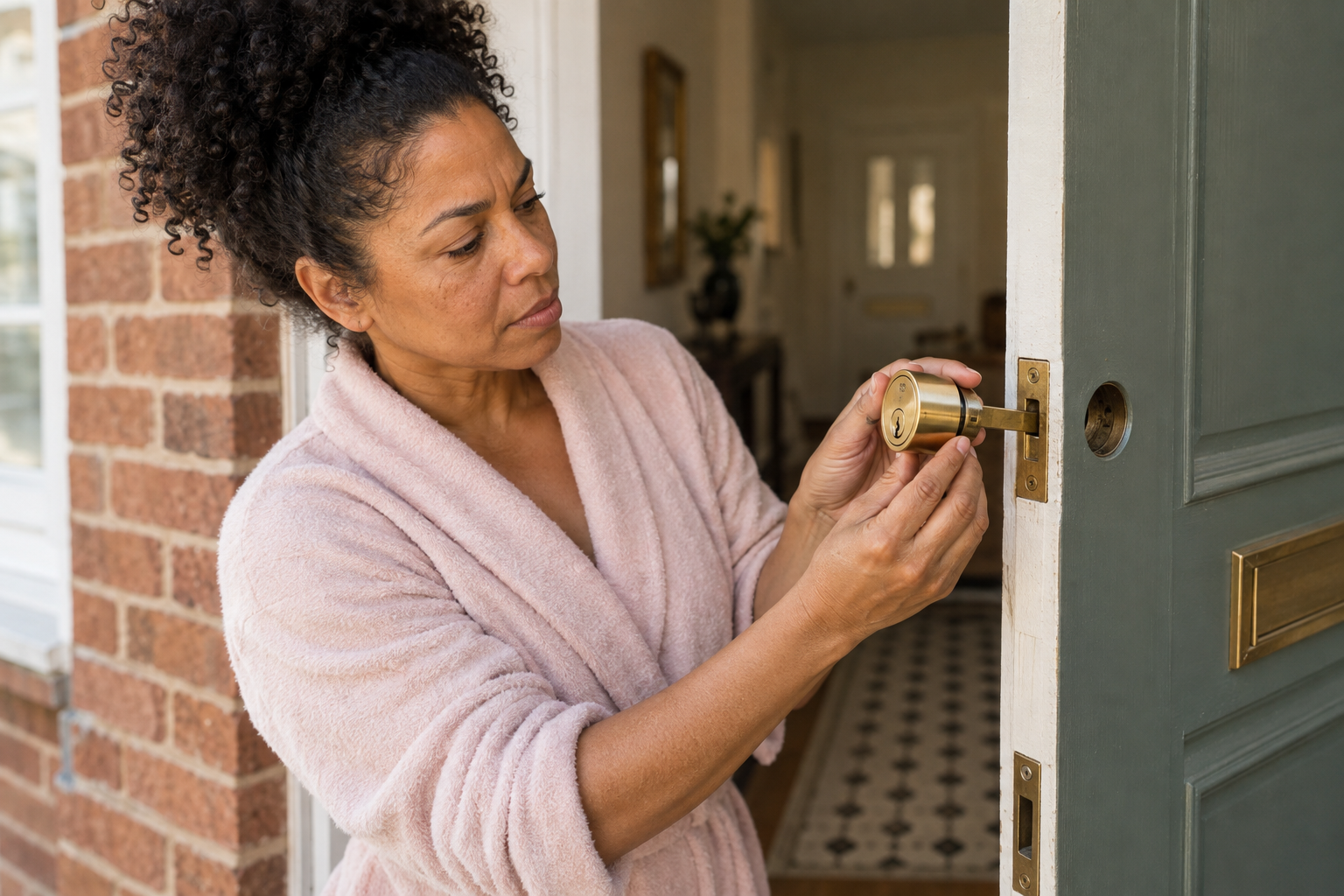
A basic pin tumbler deadbolt can be bumped open in seconds by someone with almost no skill. For most houses, an ANSI/BHMA Grade 1 deadbolt fitted with spool and serrated pins handles both threats, while Medeco, Mul-T-Lock and ASSA Abloy high-security cylinders earn their place when key control matters.
- Lock bumping defeats standard pin tumbler cylinders using a key cut to the deepest depth in every position plus a sharp tap, and it takes almost no skill, which is why bump resistance is the first cylinder upgrade for most Etobicoke homes.
- Bump resistance and pick resistance are different protections: Kwikset SmartKey resists bumping by design, while pick resistance comes from spool and serrated security pins, sidebars, or patented systems from Medeco and Mul-T-Lock.
- UL 437 is the standard that tests key lock cylinders against timed picking (10 minutes) and forcing attacks, so a UL 437 listing is the clearest sign a cylinder resists both bumping and picking.
- Bargain big-box deadbolts can, in our field experience, usually be picked in under 10 seconds, and serious break-ins specifically target this class of lock.
- Smart locks like August mount over your existing deadbolt and leave the original exterior cylinder in place, so installing one does nothing to fix a bump-vulnerable lock.
- Rekeying comes first after any home purchase or tenant turnover in the West GTA, because every previously issued key keeps working until the pins inside the cylinder are changed.
Here is the part the hardware aisle leaves out. In our experience, the forced doors we repair across Etobicoke were far more often kicked, pried or slipped than picked. The cylinder matters, but it is one link in a chain.
If you’re a Mimico homeowner who just bought an older house near the lake and inherited a drawer of mystery keys from the previous owner, the order of your upgrades matters more than the brand on the box. This is also for landlords with a basement or upper unit in New Toronto or Long Branch, not for condo owners whose main entry sits behind a building fob system.
- What is the real difference between bump-proof and pick-resistant?
- Bump-resistant cylinders like Kwikset SmartKey
- Pick-resistant, security-pinned cylinders
- High-security cylinders: Medeco, Mul-T-Lock, ASSA Abloy
- Do smart locks solve bumping and picking?
- Cylinder-upgrade mistakes we see most
- When to choose which
- Our verdict
- Our take after years of locksmithing
- Frequently asked questions
- Sources
Three realistic cylinder upgrades exist for a West Toronto front door. Here is how they line up on the attributes that actually decide the purchase.
| Attribute | Bump-resistant | Pick-resistant (security-pinned) | High-security patented |
|---|---|---|---|
| Main attack stopped | Bumping | Picking, and makes bumping unreliable | Bumping, picking and unauthorized key copying |
| How it works | Sidebar and slider design with no classic pin stacks to jump | Spool, serrated and mushroom pins that false-set under a pick | Rotating angled pins plus sidebar (Medeco), pin-in-pin (Mul-T-Lock), rotating discs with no pins (Abloy Protec2) |
| Example products | Kwikset SmartKey Security deadbolts | Schlage B60N Grade 1 or a Yale deadbolt, re-pinned with security pins | Medeco3, Mul-T-Lock MT5+, Abloy Protec2 |
| Key copy control | None: copies at any key kiosk | None on standard keyways | Patented keys cut only by authorized dealers |
| Cost tier | Entry | Entry to mid (re-pinning an existing lock is the lowest-cost path) | Premium, quoted after on-site assessment |
| Best fit | Budget upgrade on a secondary or rental door | Most single-family front and back doors | Multi-unit houses, many past key holders, hidden side or laneway doors |
| Main weakness | Bump-proof is not attack-proof; keys copy freely | Only as good as the pin work; keys still copy freely | Premium cost; key copies require a dealer visit |
Bump Proof vs Pick Resistant Lock Cylinder for Mimico Home: What’s the Real Difference?
The bump proof vs pick resistant lock cylinder for Mimico home question comes down to two different attacks on the same pin tumbler mechanism. Bumping is a brute-force trick that needs almost no practice. Picking is a skill that takes real time to learn.
A bump key is cut to the deepest depth in every pin position. The attacker inserts it one notch shy of full depth, applies light turning pressure, and strikes the bow with a screwdriver handle. That sharp tick sends energy through the key pins into the driver pins, which jump above the shear line for a split second, and the plug turns.
Picking works differently. A tension wrench holds slight rotational pressure while a pick lifts each pin stack until it sets at the shear line, one at a time. On a standard 5-pin cylinder with plain pins, a practiced picker feels each pin set cleanly.
Here’s the asymmetry. A cylinder that genuinely resists picking, through security pins or a sidebar, usually makes bumping unreliable too. A cylinder sold as bump-proof does not automatically resist a skilled picker, a forced attack, or a copied key.
Bumping uses a deepest-cut key and a tap to open standard pin tumbler locks with little skill. Picking sets pins one by one and takes practice. Real pick resistance usually brings bump resistance with it, but a bump-proof label does not guarantee pick resistance.
What does a bump-resistant cylinder like Kwikset SmartKey actually stop?
A bump-resistant cylinder such as Kwikset SmartKey stops the bump key attack, because its sidebar-and-slider design has no conventional driver pins for a bump key to knock above a shear line. Kwikset markets SmartKey specifically on that bump resistance. It also lets the owner rekey the lock with the SmartKey tool and a working key.
The strengths are real. SmartKey deadbolts are stocked at nearly every hardware store in Etobicoke and Mississauga, they fit standard door preps, and the self-rekey feature appeals to a landlord turning over a basement unit on short notice. For a secondary door, that combination is reasonable.
The weaknesses deserve equal airtime. Bump-proof is a narrow promise. Older SmartKey generations drew public criticism from security testers over force-based attacks on the cylinder, and Kwikset has since revised the design, so the generation on your door matters. SmartKey keys also copy at any kiosk, which means a past tenant or contractor can still walk around with a working duplicate until you rekey.
Our honest read: SmartKey solves the cheapest attack well. It does not solve key control at all. If your front door faces Lake Shore Boulevard West foot traffic and you want a step up from a builder-grade lock, it beats doing nothing, but it is a floor, not a ceiling.
What does a pick-resistant, security-pinned cylinder add?
A pick-resistant, security-pinned cylinder adds spool, serrated or mushroom-shaped driver pins that deliberately mislead a picker, and those same pins make bumping far less reliable. On a solid ANSI/BHMA Grade 1 deadbolt such as the Schlage B60N, or a good Yale deadbolt, security pinning is the most practical way to cover both threats at once.
Spool pins create a false set. Under a tension wrench, the plug turns slightly, the picker thinks progress is happening, and then the plug counter-rotates as the spool’s narrow waist catches. Serrated pins add multiple small ledges that snag at the shear line. You can feel it through the wrench. It is slow, frustrating work for an attacker.
The best part is cost efficiency. If your existing deadbolt is a sturdy Grade 1 or Grade 2 body, a technician can often re-pin the cylinder with security pins during a standard lock rekeying and lock change service, which cancels every old key and upgrades pick resistance in the same visit.
The weakness is twofold. Results depend entirely on the pin work, and standard keyways still copy at any kiosk. Re-pinning a bargain Grade 3 lock is also wasted effort. In our field experience, most bargain big-box deadbolts can be picked in under 10 seconds, and serious break-ins specifically target this class, so the body itself has to be worth upgrading.
When are Medeco, Mul-T-Lock or ASSA Abloy high-security cylinders worth it?
Medeco, Mul-T-Lock and ASSA Abloy high-security cylinders are worth it when key control matters as much as pick resistance: multi-unit houses, homes where many people have held keys, and doors hidden from the street. These cylinders resist bumping and picking through patented mechanisms, and their keys can only be cut by authorized dealers.
Each brand gets there differently. Medeco cuts its keys at angles, so pins must both lift and rotate to the correct position before a sidebar releases. Mul-T-Lock uses telescoping pin-in-pin stacks, and the MT5+ adds a movable element inside the key itself. Abloy Protec2, from the ASSA Abloy family, uses rotating discs instead of spring-loaded pins, so classic bumping has nothing to strike.
Several Medeco and Mul-T-Lock lines carry UL 437 listing, the standard that subjects cylinders to timed picking and forcing tests. Ask for the specific model’s listing rather than assuming every product in a brand’s catalog has it.
The trade-offs are practical. These are premium-tier products, copying a key means a dealer visit with your key card, and tight tolerances dislike grit. Near the lake, a February morning can leave road salt crusted on a deadbolt face. We service these cylinders with a dry lubricant, never a household spray oil that gums up in the cold. One more thing. A high-security cylinder in a weak door with a short-screw strike plate is money spent on the wrong link.
Do smart locks like Schlage Encode, Yale Assure or August solve bumping and picking?
Smart locks like Schlage Encode, Yale Assure and August resist bumping and picking only as well as the mechanical key cylinder they use or sit behind. The app, the keypad and the auto-lock do not change what happens when someone works the keyway from the porch.
August is the clearest case. The August Wi-Fi Smart Lock mounts over the interior thumb-turn of your existing deadbolt, which means the old exterior cylinder stays exactly as it was. If that cylinder was a builder-grade pin tumbler, it is still a builder-grade pin tumbler.
Keyed versions of the Schlage Encode and Yale Assure Lock 2 keep a traditional key cylinder for backup entry. The Yale Assure Lock 2 is also sold in key-free versions with no keyway at all, which removes bumping and picking from the equation entirely and shifts the question to battery management and code hygiene.
What surprised many owners we’ve talked with is how often a smart upgrade made them feel more secure while the actual cylinder risk stayed unchanged. If you’re going smart, pair it with a security-pinned cylinder or go key-free. Our smart lock installation service can check the cylinder during the install.
What cylinder-upgrade mistakes do Etobicoke homeowners make most often?
Etobicoke homeowners most often make four cylinder mistakes: skipping the rekey after moving in, buying bargain big-box deadbolts, upgrading the cylinder while ignoring the strike plate, and booking work off a flat phone quote. Each one undercuts whichever bump-proof or pick-resistant cylinder they eventually buy.
Moving in or renting without rekeying
Renting a new place without rekeying leaves previous tenants’ keys working, and the same cylinder keeps rotating with every turnover. Buyers in The Queensway and Islington Village fall into the same trap after closing. No cylinder upgrade matters while strangers hold valid keys.
Buying the cheapest deadbolt on the shelf
Bargain big-box deadbolts are the lock class serious break-ins target, and in our experience most can be picked in under 10 seconds. A Grade 3 body with plain pins gives neither bump nor pick resistance worth paying for.
Ignoring the door around the cylinder
A Medeco cylinder held by a strike plate with short screws into soft trim still gives way to a kick. Long screws that reach the wall stud cost little and matter a lot. It’s the cheapest upgrade on the door.
When should you choose each cylinder type?
Each cylinder type wins in a specific situation, and the right pick for a lakeshore Etobicoke house depends on who has held keys, which door is at risk, and how sound the existing deadbolt body is.
- Choose bump-resistant (Kwikset SmartKey Security) for a secondary door, a garage entry or a rental unit where the owner wants fast self-rekeying and the main concern is low-skill bumping.
- Choose security-pinned (Schlage B60N or Yale Grade 1, re-pinned) for the front and back doors of most single-family homes in Long Branch, New Toronto and across the Lakeshore, especially when the existing deadbolt body is solid and only the cylinder needs work.
- Choose high-security (Medeco3, Mul-T-Lock MT5+, Abloy Protec2) when the house has a basement or upper unit, when cleaners, contractors or dog walkers have carried keys, or when a side or laneway door sits out of view from the street.
- Choose key-free smart (Yale Assure Lock 2 key-free) when you want to remove the keyway entirely and are comfortable managing batteries and access codes.
Our Verdict: Which Upgrade Should Mimico Homeowners Buy First?
Our verdict on the bump proof vs pick resistant lock cylinder for Mimico home decision: buy bump resistance first, but buy it as part of a security-pinned Grade 1 cylinder, because that single upgrade covers both the low-skill bump attack and casual picking. Pure bump-only products are the budget fallback, not the target.
For the first-time buyer on a tight budget, re-pinning a solid existing deadbolt during a rekey gives the most protection per visit. For the landlord with a second unit, a Medeco or Mul-T-Lock system with restricted keys is the right first purchase, because key control is the bigger exposure. For everyone, the sequence below matters more than any single brand.
Rekey every exterior lock
Cancel every key you didn’t cut yourself, including the ones the previous owner forgot they lent out.
Reinforce the strike plate
Long screws into the wall stud address the kicked-door attack that we see far more often than picking.
Upgrade to a security-pinned Grade 1 cylinder
Spool and serrated pins in a Schlage or Yale Grade 1 body cover bumping and casual picking together.
Add high-security key control where it counts
Move to Medeco, Mul-T-Lock or Abloy on doors where unauthorized key copies are the real risk.
Our take after years of locksmithing in Etobicoke and the Lakeshore
Our take after years of residential locksmithing in Etobicoke is that homeowners overweight the word on the package and underweight who holds keys. People ask us about the bump proof vs pick resistant lock cylinder for Mimico home choice as if it were the whole security question. It’s maybe a third of it.
What actually matters, in order: who has a working key, whether the door and strike survive a kick, and only then how well the cylinder resists manipulation. We’ve stood at plenty of doors with a high-end cylinder in a frame that was already split. The lock was fine. The door wasn’t.
The one thing we’d tell a friend: pay for the mechanism, not the logo. Same principle as car keys, where calling the dealership typically costs two to three times what a mobile locksmith charges for the exact same key. A re-pinned Grade 1 deadbolt installed properly by a residential locksmith in Etobicoke will outperform a flashier lock installed badly, every time.
Frequently Asked Questions About Bump- and Pick-Resistant Cylinders
Is a bump-resistant lock cylinder also pick-resistant?
A bump-resistant lock cylinder is not automatically pick-resistant, because bumping and picking defeat pin tumblers in different ways. Kwikset SmartKey resists bumping through its sidebar design, while true pick resistance comes from security pins, sidebars or patented systems like Medeco and Mul-T-Lock. A cylinder listed to UL 437 has been tested against both timed picking and forcing attacks.
Can a locksmith make my existing deadbolt bump-resistant without replacing it?
An existing pin tumbler deadbolt can often be made more bump- and pick-resistant by rekeying it with spool and serrated security pins, which an Etobicoke Locksmith technician can do on site anywhere in Etobicoke and West Toronto. This works best on solid ANSI Grade 1 or Grade 2 deadbolts, since a bargain Grade 3 lock usually is not worth re-pinning. Patented key control from Medeco or Mul-T-Lock requires a new cylinder.
Do smart locks like Schlage Encode or August protect against lock bumping?
Smart locks like Schlage Encode, Yale Assure and August protect against lock bumping only as well as the mechanical cylinder they use or sit behind. August mounts on the inside of your existing deadbolt, so the original exterior cylinder stays exposed, while keyed Schlage Encode and Yale Assure models keep a traditional key cylinder. A key-free Yale Assure Lock 2 model removes the keyway entirely.
How much does a high-security cylinder upgrade cost in Mimico?
High-security cylinder upgrade pricing in Mimico depends on the brand (Medeco, Mul-T-Lock or ASSA Abloy), how many doors share one key, and the condition of the door and deadbolt. Be wary of any single flat number quoted over the phone, because a reputable locksmith assesses the hardware on site and quotes a range. Contact Etobicoke Locksmith through etobicoke-locksmith.ca for a quote on your specific doors.
Sources
- ANSI/BHMA grading of residential deadbolts (Grade 1, 2 and 3): Builders Hardware Manufacturers Association (BHMA)
- UL 437 key lock standard and its picking and forcing tests: UL Solutions
- Kwikset SmartKey bump resistance and owner rekeying: Kwikset
- Medeco angled-cut keys, sidebar design and patented key control: Medeco
Etobicoke Locksmith
 Listen to article
- Lever Handles vs Knob Locks for Mississauga Homes: Which Works Better for Aging-in-Place Doors
- Mimico Condo Buildings Have a Master Key Vulnerability Most Residents Don’t Know About
- Sliding Patio Door Lock Repair vs Replacement in Mimico: Which One Actually Holds
- How to Upgrade Your Home Security with Smart Locks in Etobicoke
- Schlage Encode vs Yale Assure vs August Wi-Fi: Which Smart Lock Holds Up in a Mimico Condo Entrance